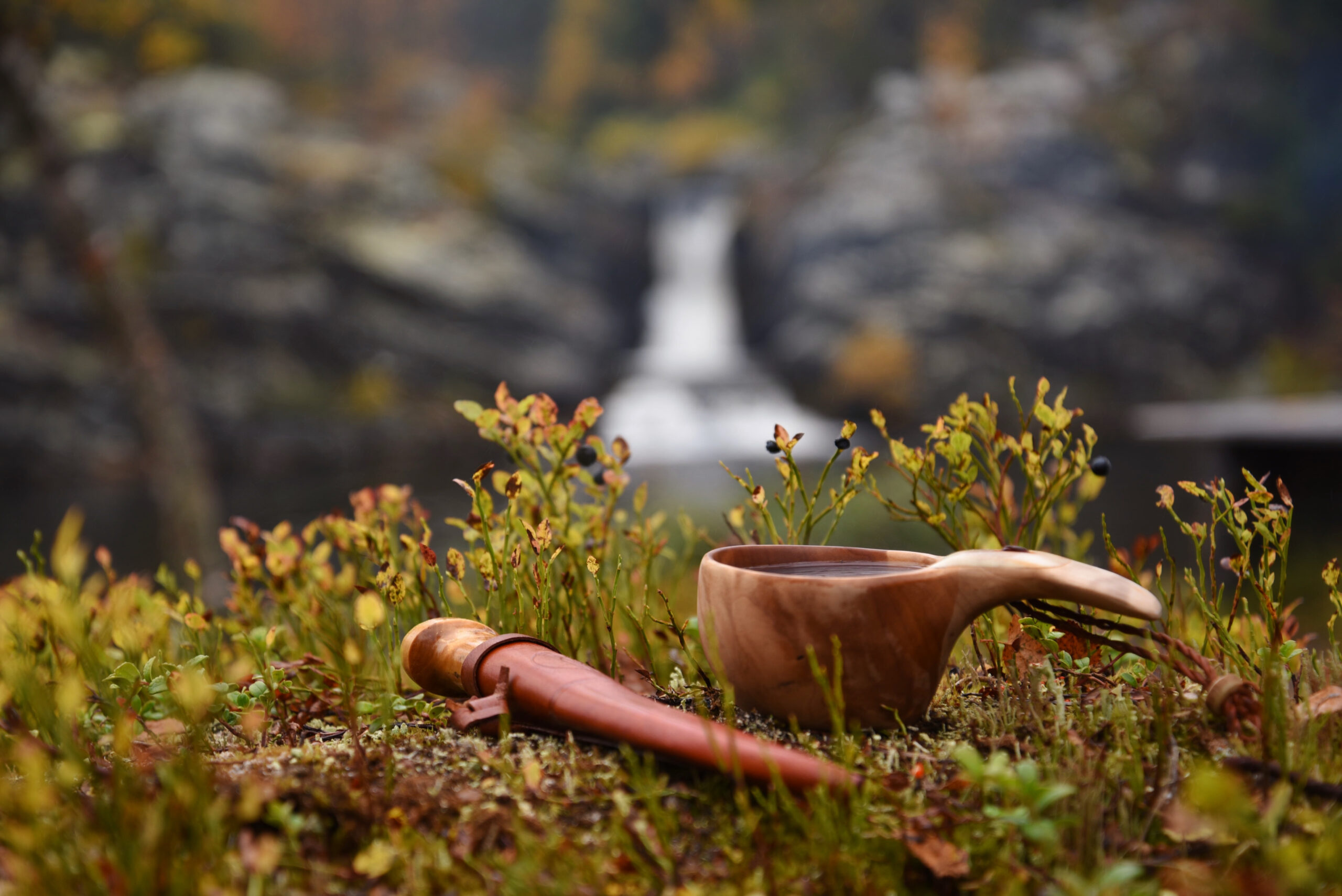
It is thanks to the right of public access that everyone can move freely in the Swedish countryside. However, there are a few things you need to keep in mind when you’re out hiking, camping, climbing, horseback riding, picking flowers, or doing other activities in nature.
Since the right of public access ensures that everyone has access to nature, it is our shared responsibility to respect this age-old custom—not least by exercising it with care. However, many people are unsure about the opportunities, but also the obligations, that the right of public access entails. Swedish legislation addresses everyone’s access to and responsibility for nature in general terms. Therefore, it is important that you familiarize yourself with the rights and obligations included in the right of public access. The law states that everyone must show consideration and care in their interaction with nature.
The Right of Public Access allows people to hike, bike, and ride horses in nature, for example
For us Swedes, the right of public access makes it easier to enjoy the outdoors. Not many countries have this privilege. To ensure that everyone can enjoy nature, there are a few things to keep in mind:
- It is important not to damage forest plantations or other sensitive land.
- To avoid inconveniencing the residents, please be careful not to trespass or step onto anyone’s property. The residents have the right to be left in peace.
- Be careful not to interfere with landowners’ activities.
- When riding horses or bicycles off-road, there is a risk of damaging the ground. It is therefore important to avoid riding or cycling over soft, fragile ground, as well as on marked exercise trails, ski trails, or hiking trails.
- When passing through fenced-in pastures, please be careful not to disturb the animals or damage the fences.
Camp out in the open
Under the right of public access, you may camp in the same spot for up to 24 hours. However, if you are camping in a large group with many tents, you must ask the landowner for permission. It is important, however, to pitch your tent in a suitable location—that is, not on farmland and not too close to residential buildings. Being considerate is the most important aspect of the right of public access. Special rules apply in national parks and nature reserves. Generally, camping is prohibited throughout the entire area except at specifically designated sites.
Building a fire in nature
You are allowed to build fires in nature, but open fires also cause concern among many landowners because forests of great value burn down every year due to carelessness with campfires. To reduce the risk of the fire spreading, there are a few things to keep in mind.
- Do not burn outdoors in dry weather, as there are often fire bans in effect and the risk of fire is higher.
- It is important to find a place where the fire cannot spread.
- Please avoid lighting fires directly on or next to rock outcrops. This can cause cracks and damage that will never heal.
- Once you've started a fire, make sure to put it out completely before you leave.
- Do not leave any traces of the fire, such as a fire pit or similar.
Pick up flowers, berries, mushrooms, and twigs from the ground
You may pick flowers, berries, mushrooms, and rice from the ground. But to avoid harming nature, there are a few things to keep in mind:
- Some plants are protected and may not be picked. The County Administrative Board can provide information about protected plants. Orchids are protected throughout the country.
- Do not take twigs, branches, bark, or bark strips from living trees. This can damage them.
The Right of Public Access and Dogs
Of course, man’s best friend is welcome to join you in nature. From March 1 to August 20, wildlife in the forest is particularly vulnerable, so dogs are not allowed to run loose. Even at other times of the year, you must keep your dog under such control that it does not disturb or harm wildlife or other people. In some parts of the country, dogs must be kept on a leash year-round.
Hunting and Fishing
Hunting and fishing are not included in the right of public access. However, you may fish freely with a rod and certain other hand-held gear along the coasts and in our five largest lakes: Värnen, Vättern, Mälaren, Hjälmaren, and Storsjön. A fishing license or other permit is required for fishing in other waters. Along the West Coast, the Norrland Coast, and the southern coast of Skåne, other fishing methods are also included in free fishing. Otherwise, net fishing, trolling, angling, salmon fishing, or drag rowing are not typically included in free fishing, particularly along the Norrland Coast. Things to keep in mind:
- Find out what the rules are where you want to fish.
- Don’t leave hooks and lines behind in nature. They can become death traps for animals.
- Leave the animals' young and nests alone.
- You are not allowed to take bird eggs. This is considered hunting. Hunting may be conducted in accordance with the provisions of the Hunting Ordinance. Species threatened with extinction are protected; for example, all frogs and snakes.
Checklist for your outing
I always pick up my trash.
• I do not build fires on rock slabs or when a fire ban is in effect.
• I stay far enough away from other people’s homes.
• I’ll camp wherever and for as long as I’m allowed to.
• I know how to relieve myself in nature.
• I do not harm forests or land.
• I only pick plants that I know I’m allowed to pick.
• I know the rules for protected areas.
• I’ve got my dog under control.
• I always close the gate if I have to pass through a pasture along the trail.
• I only drive motor vehicles where I’m allowed to.
• I go boating and moor my boat wherever I can.
• I always treat animals and nature with respect.
Vemdalen is also reindeer grazing land, and while the reindeer may seem unafraid, they are wild animals and may feel stressed by our presence. Please observe and enjoy them from a distance!
Source:Swedish Environmental Protection Agency
Read about the right of public access in other languageshere!