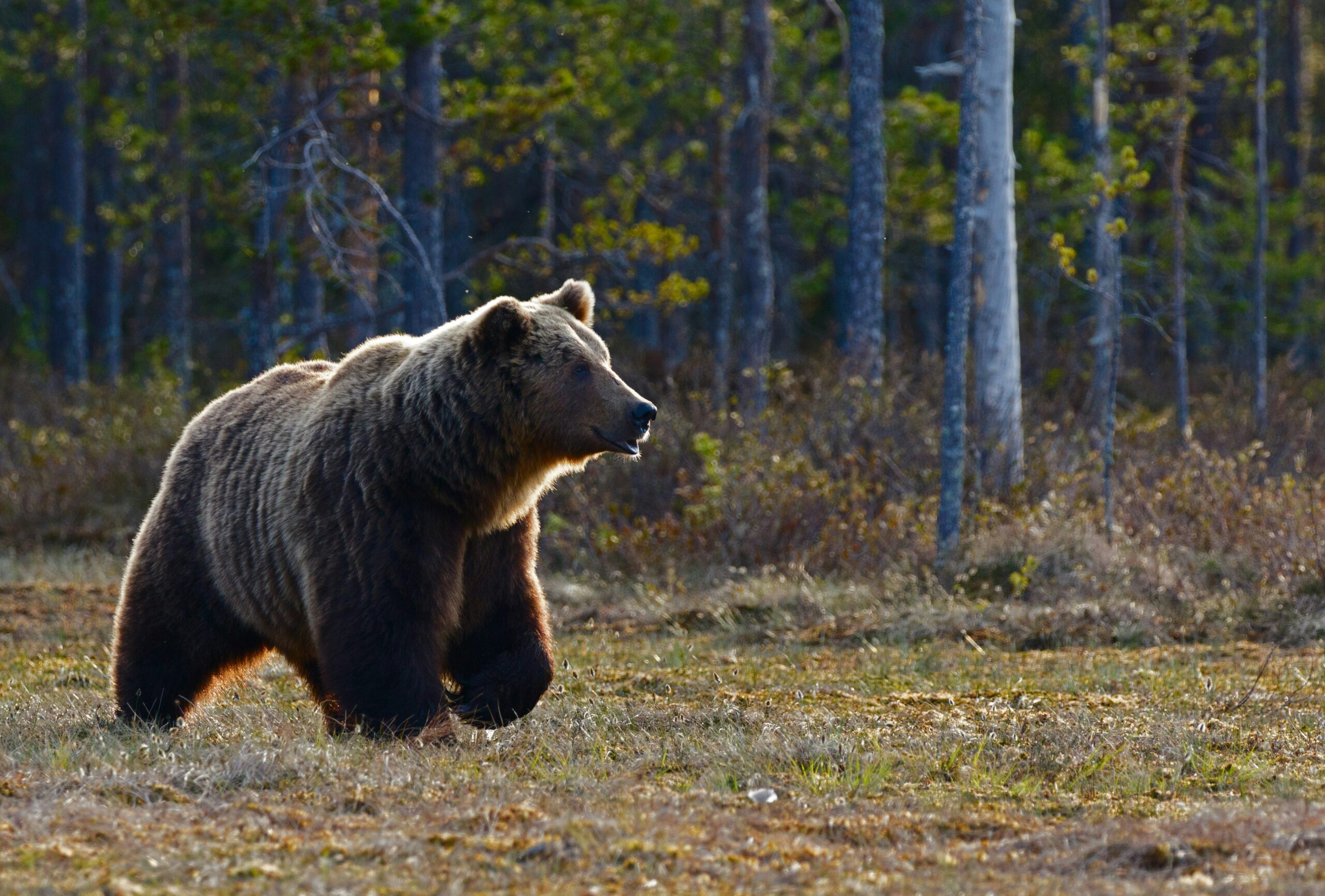
Every five years, the Swedish Environmental Protection Agency conducts a survey to estimate the number of bears in Sweden. In the fall of 2022, the results of the survey showed that there were approximately 2,800 bears in Sweden, spread across an area covering just over two-thirds of the country.
The Scandinavian brown bear is naturally very shy around humans. With its keen hearing and keen sense of smell, a bear will usually move away from any area where people are present. If you want to make sure you don’t surprise a bear, you can simply talk a little more or perhaps sing a tune while you’re out hiking. At the tourist information office on Skalets Torg, you can buy a small bear bell for those who want to feel extra safe in the forest.
Sometimes, however, a bear and a human do come face to face. In that case, it’s good to be prepared and know how to react.
If you're sitting in the car and spot a bear
Stay in the car and enjoy the view! Don’t get out to take pictures. If you come across a bear cub by the roadside, don’t touch it. The mother bear has a strong instinct to protect her cubs and is likely nearby.
If you're out in early summer in areas with a high concentration of bears
The bear’s mating season occurs in May, and it’s good to know that bears are most active and out and about during the day in the spring. This is also the time when you might encounter adult bears together. Even solitary young males on the prowl may travel long distances in early summer. If you see a bear, make your presence known by speaking at a normal volume and carefully back away.
If you're out in the woods in late summer
Half of a bear’s annual diet consists of berries. During berry season, most bears are busy consuming large quantities of berries to build up fat reserves in preparation for hibernation. An adult bear can consume nearly 90 kg of berries in a single day. Berry pickers should be aware of the small possibility that a bear may be in the vicinity of berry-rich areas. However, bears do not have a territorial instinct regarding specific berry-rich locations. If you encounter a bear while picking berries, do exactly as you would in any other bear encounter: make your presence known by speaking calmly in a normal tone and back away.
If you're out walking your dog in the woods
Keep your dog on a leash. There is a risk that an unleashed dog could encounter a bear. A dog that isn’t trained to handle a bear will most likely run back to its owner for protection. In the worst-case scenario, the bear will be right on its heels. Even if the dog is the one that provoked the bear, such a situation can be dangerous. Therefore, keep your dog on a leash during your hike.
If you encounter a bear that doesn't turn and run away, but continues moving toward you
In that case, it’s likely a bear that feels provoked by your presence. It could be a female bear with cubs, a bear that has a carcass nearby, or one that was startled by your sudden appearance and didn’t have time to get to safety. It could be a bear that was awakened from hibernation or disturbed just outside its den. Finally, it could be your dog that has agitated the bear if it was not on a leash. A provoked bear may lunge at you, which is often a feigned attack. You should clearly signal to the bear that you have peaceful intentions. Speak calmly into the air; do not strike at the bear or make any other threatening gestures. Retreat from the area at a steady pace.
If the bear is truly provoked and attacks
Make one last attempt to distract the bear. Throw something in front of it. A bucket or a fishing rod. If that doesn’t work, your only option is to lie down on the ground and stay completely still. Curl up in a fetal position or lie on your stomach and clasp your hands over your neck to protect your head. By making yourself as small as possible and remaining completely passive, you minimize the threat to the bear.